Sunday, May 25, 2025

Questions about post-deficit

Im on a 15kg weight loss journey. Ive currently lost 3.6 kg in 24 days, whilst on 1200 calories daily. I have been incorporating a few walks in a week, but nothing consistent, and no gym.

I’m worried about my post-deficit life as I’ve heard that being in an extended calorie deficit can lower your metabolism and lead to rapid weight gain afterwards. Will I be okay to continue losing with my calorie deficit, and then just increase to maintenance and begin hitting the gym, or should I think about incorporating the gym from now?

submitted by /u/Aguacaticaa
[link] [comments]

from loseit - Lose the Fat https://ift.tt/oYxFw98

Saturday, May 24, 2025

Please help me understand why my progress is slow + give some tips

Hi I'm 17, male, 5'8, 165lb. I've been tracking calories and trying to cut since early April and today is the 49th day. I use an app called Cronometer to track my calories and it says my BMR is 1738, and my energy expenditure from exercise is 652 per day.

On the app it lets you choose your activity level and I chose "Lightly Active" which according to the app means light intensity exercise 1-3 times a week. I go to the gym ~5 times a week and I thought Lightly Active was an underestimation however my progress has been slow so I am a bit confused.

Since I go to the gym nearly daily my body uses energy for the muscles so I know that can slow down weight loss, however I sorta am confused if the slow progress is because of that or because I'm bad at counting calories too. I set my weekly target to -1.75lb per week so that way I could still lose weight at a decent rate even with my body recomping. It leaves me with 1517 calories daily as a target and I usually hit that.

I am a teenager so I live with my parents and my parents cook damn well so eat their food a lot too, and they don't really measure what they put in or anything since they're so used to it so I just tend to estimate the calories for food. They tend to cook while I'm at school so I can't really be there and measure it with them.

Between April 13th and May 17th I had lost 4.6lb. Thursday I ate a lot because it was a school event but I definitely went insanely overboard that day. Yesterday night I ate right before bed and so when I weighed myself this morning I was actually upto 165.7lb. I also went very hard at the gym yesterday, genuinely the hardest I have ever pushed myself and I feel soreness so maybe water retention too because I worked my glutes and they never really tended to get much work before?

I feel lost because there's so many variables and I feel as if I'm not really progressing as well as my lower end estimates. April 28th I was 165.3 and May 17th I was 163.9, that's just a 1.4lb difference in NINETEEN days, while I expected to lose atleast 1 pound per week (this is a low-end estimate bc according to my app I should be losing between 1.75-1.5lb and I went down to 1lb on personal estimations because of body recomp). I've thought about going lower in terms of calories but I feel like it would be insanely difficult to do so because I already have problems with hitting my protein goals. Thank you for any help!

submitted by /u/FusRoDoor
[link] [comments]

from loseit - Lose the Fat https://ift.tt/J0YL7fp

Possible better explanation for the whoosh effect?

For background, the only explanations I've seen for the whoosh effect seem to be that fat cells fill up with water again "just in case" until you've lost enough weight that they finally decide to just let go of it. This never really sat well since it doesn't align much with my understanding of fat cells.

I've been reading about the intersitium (fluid-filled space between cells) and I stumbled upon something that seems like a much better explanation. Basically, I think that the weight plateau and squishier feeling fat that you get before a whoosh is probably due to water retention in intersitual fluid and the process of remodelling the extracellular matrix that holds it together. When you lose weight, the extracellular matrix needs to remodel itself to accomodate the changes, and it seems that some chemicals that are involved in extracellular matrix remodelling such as hyaluronic acid are also highly hydrophilic, probably leading to water retention. The fact that restructuring is required during weight loss also would seem to suggest the existing structure is not sufficient, so that lack of structure and the different location of the fluid could possibly explain the tissue feeling different? Additionally, lymphatic drainage in adipose tissue is quite slow, so that could explain why it takes some time for you to see the water weight disappear.

I looked more into proposed explanations, and found this which discusses the current pervading idea that fat cells fill up with water. Although there was apparently evidence that water in adipose tissue increases during weight loss, it's poorly supported that it's actually inside fat cells. It also discussed some other proposed mechanisms, but I didn't find those particularly interesting since they don't explain where the weight actually is. Although it didn't really mention anything about intersitual fluid, I think the note that it's probably not inside the cells lends a bit of credence to the idea it's in the intersitium instead since that would be where most of the water in adipose tissue would be.

I'm no scientist so I could be wrong about some things, but I'm very interested to hear what other people think of this! Or is there some other research that sheds more light on this that I'm unaware of?

submitted by /u/petitlita
[link] [comments]

from loseit - Lose the Fat https://ift.tt/Y2JuVo3

Hers Weight Loss - Kit 1 Experiences

New to reddit but looking for support in starting a serious weight loss journey. I weighed myself this morning and it was much higher than I expected, very disheartening. I am working on a 6 day full body workout routine, focusing on 30 minutes of strength exercises in the morning with 1 hour of walking in the evening. I have just signed up for Hers kit 1 to assist in this journey and wondered if others had tried it and what their experience was? I'm 5'3" and 155lbs.

Mainly what I'm looking for is is this worth the money and have you noticed significant results? I have never used medication to assist my weight loss efforts but just don't have the time to weight for just diet and exercise.

submitted by /u/Cheap-Hat7110
[link] [comments]

from loseit - Lose the Fat https://ift.tt/8R6LCQN

Friday, May 23, 2025

Loose skin after losing 130lbs

I lost around 150 lbs over 7 years, with the last 80 of it being lost within the last 18 months. Now that I've reached my goal weight at under 20% body fat that I discussed with my doctor, it's obvious that the majority of my still very sizeable gut isn't just fat, but is now mostly just severe loose skin.

It seems like my only effective solution to this is surgery, and I have a severe phobia involving anaesthesia and invasive surgery, and will likely not be able to afford it even if this was overcome.

I've also started boxing, which I really love and has been a huge contributor to my weight loss, but if I had the surgery it wouldn't be possible to practice even with just a bag for at least 6-8 months while healing.

My biggest demoralizer is that I was hoping to finally start putting myself out there and hooking up again when I reached my current weight, but with the severity of my loose skin I don't think casual encounters are possible anymore.

I'm really struggling to cope with the reality of my situation, and feel like I can't mentally accept where I'm at. I wear compression garments and am still cutting more fat to try and improve, but I don't think there's much more I can change. It feels like the more weight I loose, the worse my stomach looks.

What are my options? How did you deal with loose skin after losing a lot of weight? What does dating look like with severe loose skin?

submitted by /u/Maximum-Calendar8322
[link] [comments]

from loseit - Lose the Fat https://ift.tt/KgQHOWr

Thursday, May 22, 2025

A month of intuitive eating

I have been doing intuitive eating for over a month now. You can see my first post about it here.

My basic rules are, eat when I’m hungry, stop when I’m full and be flexible if I’m in the middle. As well as that I’m just trying to practice basic portion control.

Doing this I’ve lost 10 pounds in 34 days, going from 237 pounds to 227. I’m very happy with this, even though my primary motivation is to have a healthier sustainable relationship with food, not to go on a weight loss journey. I’m especially happy because while I’ve leaned towards more healthy options I haven’t restricted myself at all. I’ve been enjoying cake and biscuits which is nice!

Here are the things I’ve learnt and things I’ve started doing.

  1. Intuitive eating is not intuitive!

I’m getting used to it, but intuitive eating has not been a massively intuitive experience to start! I will find that I am suddenly hungry and then won’t be 10 minutes later, or I’ll feel hungrier than I did despite just having a large meal. If I literally ate when I was hungry and stopped when I was full, my eating would be erratic, difficult to manage and I would be eating twice as much as what I need.

I’ve adopted some general attitudes around this to get around the confusing signals my stomach has been giving me. First is that, if I feel a hunger signal, that means I am hungry, even if the signal goes away. Secondly, is that after I have eaten something, it can take 20/30 minutes for my stomach to actually update my hunger level.

If I eat something and 20/30 minutes I’m still hungry, I will eat something else, but if I eat how much food I thought I needed and feel hungry immediately after, I will wait and see if it settles down.

I am still learning how to manage the normal rhythm of hunger and satiation.

  1. Exercise is awesome for inducing appetite

I’ve read some people saying that there are studies which show exercise inhibits appetite. This may be true statistically for all I know but it certainly isn’t true for me! I definitely feel hungrier the next day if I’ve exercised. To be honest this is pretty good motivation to get moving, I like eating! And so it’s nice to have a big appetite and enjoy what I’m eating. Importantly I am not “burning off” what I had for lunch. I eat when I’m hungry and stop when I’m full. It’s just that exercise complements what I’m doing.

  1. It’s not about tricking your body

Celery is great. I love celery! I don’t want to trick my stomach into thinking I’ve had food by eating celery. I’m not trying to trick my body into thinking I’ve eaten when I haven’t or try and suppress natural feelings of hunger.

  1. Snacks are great!

Snacks are amazing, fruit, nuts, seeds, peanut butter, and hummus are all awesome. They are especially helpful if I have not eaten quite enough for a meal and need to top up an hour or so later. Having snacks available makes me feel comfortable to practice portion control without worrying about not having enough to eat.

  1. It’s hard to stay out of a diet mentality

Despite specifically starting this journey to have a healthier relationship with food and not as a weight loss journey, as soon as the pounds started shifting off it has been so hard to stay out of that mentality. I have to remind myself I am not calorie counting. I have to stop myself figuring out how many calories I “burned” during a swim and how well that matches up to what I last ate. I have to stop myself from worrying when the scales go back up and I have to make myself a commit that I am not going to try and eat less just to lose the fat a little quicker. I am incredibly more conscious about my body now because it is quickly changing, and I feel fatter because I am more conscious of what I look like in the mirror.

  1. A healthy relationship with eating takes time

There’s no way around it, I’ve spent an awful lot of time the last month thinking about food, exercise and weight loss. While it has been a really enjoyable experience and I’ve been loving all the great food I’ve been eating, it is a lot, it is a lot of time energy and thought. Doing this has brought up a lot of anxieties around eating and weight I didn’t really realise I had. I think I might’ve been masking a lot of my disordered thinking around food and weight by keeping myself full all the time. It is a big adjustment and I think whilst there’s nothing wrong with enjoying myself I do think the healthiest thing is that my excitement cools down into a set of comfortable habits, rather than stays at this level of intensity.

  1. Food is a genuine joy in life

It’s really hard to explain my happiness to finally have found a relationship with food where I feel like my body is getting healthier but I also feel nourished. As I am writing this I am excited for the strawberries I will eat when I get hungry, I am going to have them with some ricotta and some chocolate. But I’m also happy that I feel satiated, I feel like I have had enough and that my body has what it needs.

submitted by /u/non_person_sphere
[link] [comments]

from loseit - Lose the Fat https://ift.tt/gweATvJ

10 Tips for a Healthy Home Cookout

Enjoy a healthy cookout in the comfort of your own home! Memorial Day is here and warm weather has arrived. Head to the backyard and whip up some nutritious and delicious food that fits into your Nutrisystem plan.

With the right recipes and meal ideas, you can stay on track with your weight loss goals this holiday. We put together these 10 tips for making your at-home cookout a healthy occasion.

20 Healthy Memorial Day Recipes

Read More

Here are 10 easy tips for a healthy backyard barbecue:

1. Don’t starve yourself before the cookout.

Nutrisystem foods on a table

We’ve all done it—skipping meals before a big event to “save up” calories for the party spread. But when you’re trying to lose weight, this can backfire. You can get so hungry that you wind up eating even more than your planned “splurge.”

Keep yourself from going so far overboard—and from showing up hangry—by keeping your blood sugar stable. Eat your Nutrisystem meals and snacks before the party and save any SmartCarbs or PowerFuels to go with your cookout meal. The fiber, protein and healthy fats in your normal meals will keep you from being too hungry, so you can measure portions of your cookout favorites and stay on track.

2. Start by filling half of your plate with veggies.
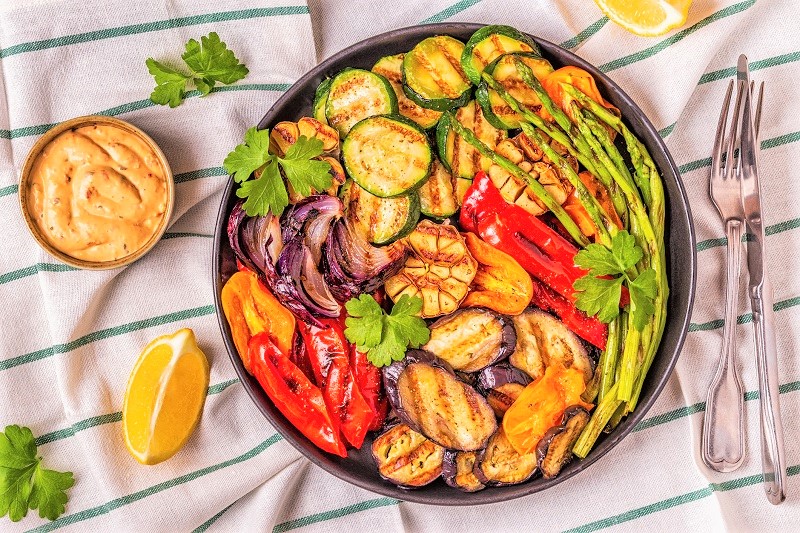
cookout grilled veggies

Less than 10 percent of Americans get their recommended daily servings of vegetables, says the Centers for Disease Control and Prevention (CDC). They explain that eating two to three cups per day can reduce your risk for heart disease, diabetes, cancer, and yes, obesity.

By eating an abundance of vegetables, you’re getting a lot of water with your food. Eating water-rich foods means that you can have more volume for less calories. This can ultimately help you lose weight. According to Science Daily, Penn State research discovered that “women who added water-rich foods to their diets lost more weight during the first six months of the study than those who only reduced fat in their diets.”

So, start with the veggies and use the grill to make them even more delicious! Get some Leaf-approved tips for grilling tomatoes, mushrooms and greens for even more flavor.

3. Find tasty, low-calorie side dish recipes on the Leaf.
home cookout

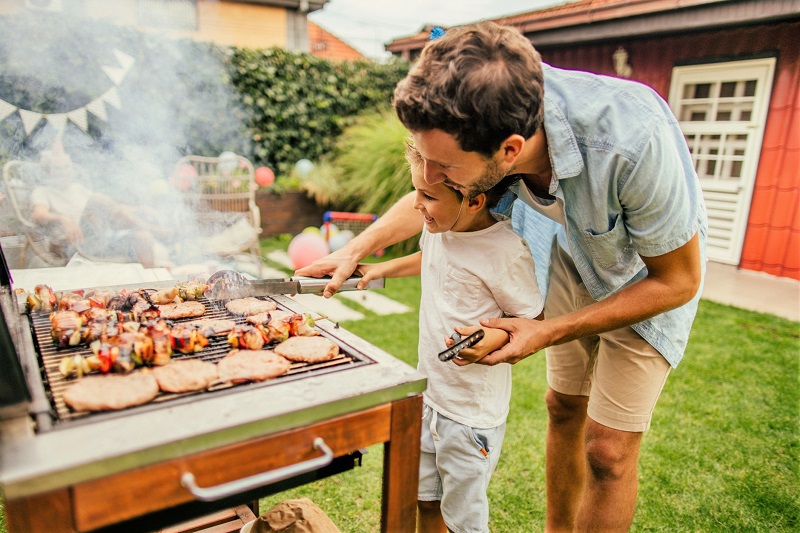
A “healthy” cookout doesn’t mean the food is boring—it should be just the opposite! The Leaf Weight Loss Blog is your source for keeping things deliciously diet-friendly. Spice up your coleslaw game with sweet options like this Broccoli Slaw with Cranberries and Lime or a fiery, crunchy bowl of this Spicy Peanut Slaw. Or go cucumber crazy: Whip up some of this five-star rated Cucumber Dill Dip or a bowl of this Zesty Cucumber and Dill Salad.

Find more recipes like these healthy cookout sides right here! >

5 Low-Calorie Condiments to Use at the BBQ

Read More

4. Tackle your cravings head-on.
cookout cravings

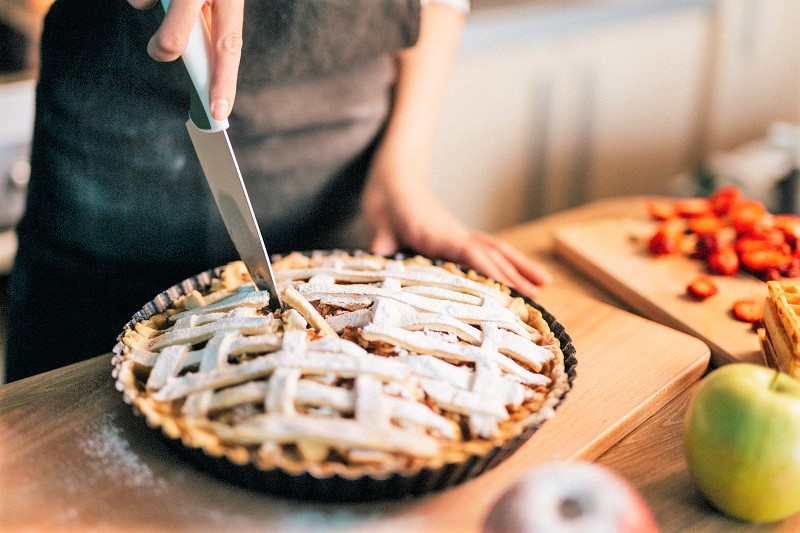
Now that your plate features some veggies, get down to business. Identify the cookout food you’re craving most and dish out a healthy, measured portion. That’s advice straight from our Nutrisystem registered dietitians: If you’re really craving a food, you should eat it. Denying yourself a small piece of a favorite pie or a slice of cheese on your burger won’t make the craving go away—it will more than likely lead you to graze on other fare, unsatisfied. It’s better to have a portion you can measure and enjoy, so you can calm your cravings and stay on track.

Click here for more surprising weight loss tips from our health experts! >

5. Keep the calories on your plate, not in your glass.

cookout recipes

Sugary beverages are thought to be a big part of the obesity epidemic in America: From 1977 to the year 2001, Americans increased their daily consumption of sweetened beverages from 50 to 144 calories per day, says The American Journal of Clinical Nutrition. Over the course of a year, that could add up to over 50,000 extra calories!

Keep your calories down and the flavor up with something summery and fun that features fruit: Try one of these refreshing summer mocktails! > If you’re a beer drinker, choose one that satisfies for fewer calories—like one of these 10 low-calorie beers that actually taste good. >

6. No grill? No problem! Pan sear your meat for a crisp crust worthy of the grill.
cookout recipes

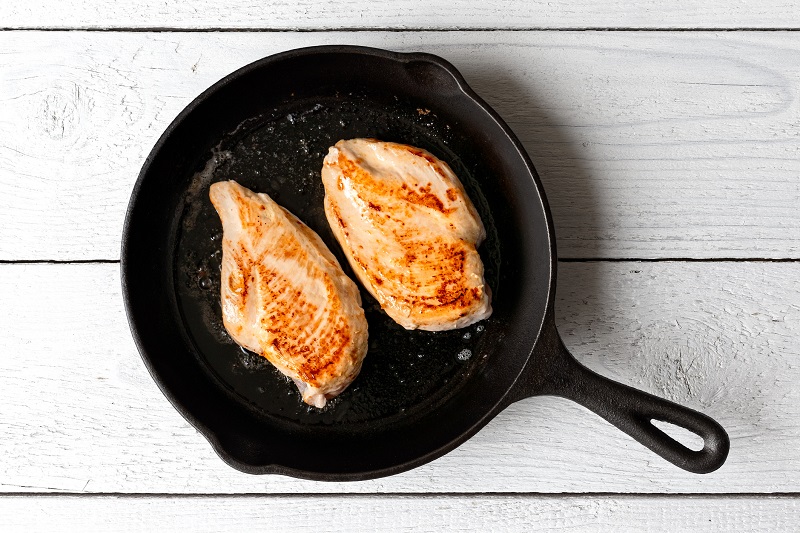
If your go-to grill move typically involves heading to a local park, you may not have a grill in your backyard. However, you can get the same flavors you love inside by pan searing your meat to perfection.

Brush a cast iron skillet with oil and turn the burner on high. Make sure to turn on the exhaust fan so your smoke alarm doesn’t go off! Brush a small amount of olive oil on each side of the steak and season liberally with salt and pepper. Once the pan is hot, cook the steak for 90 seconds to two minutes on each side. Then transfer the steak—in the pan—to the oven to bake at 325 degrees for five to seven minutes until medium-rare.

7. Marinate meat to fight cancer.
marinated meat

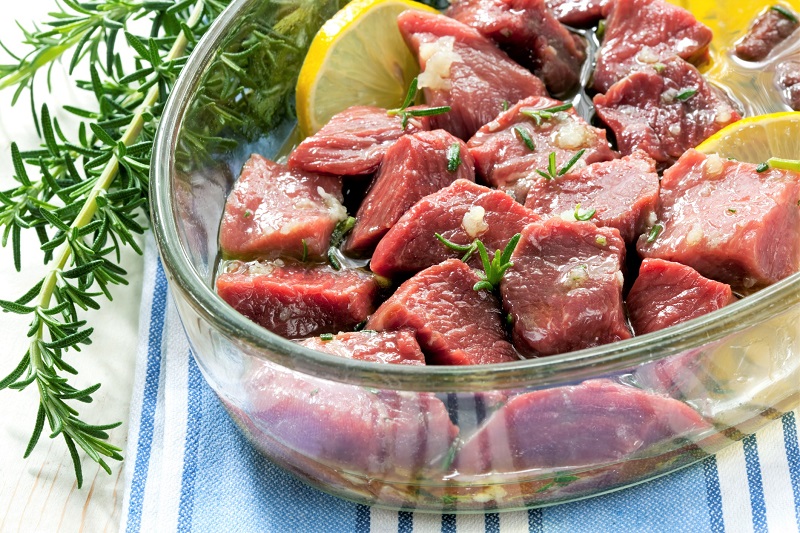
When you grill meat, compounds called heterocyclic amines (HCAs) are created, according to Natural Medicine Journal. HCAs are considered carcinogens and are said to increase the risk of cancer. However, marinating your meat in herb-infused mixtures, especially ones including rosemary, can decrease the formation of HCAs on your grill by up to 70 percent.

Try this simple, rosemary marinade for beef: Mix a half-cup of red wine vinegar, two tablespoons olive oil, a quarter-cup of chopped rosemary, two crushed garlic cloves and salt and pepper to taste. Marinate the meat for at least an hour, then drain and cook.

7 Healthy Hacks for Meat Lovers

Read More

8. Grill some fruit for a sweet, surprising dessert.
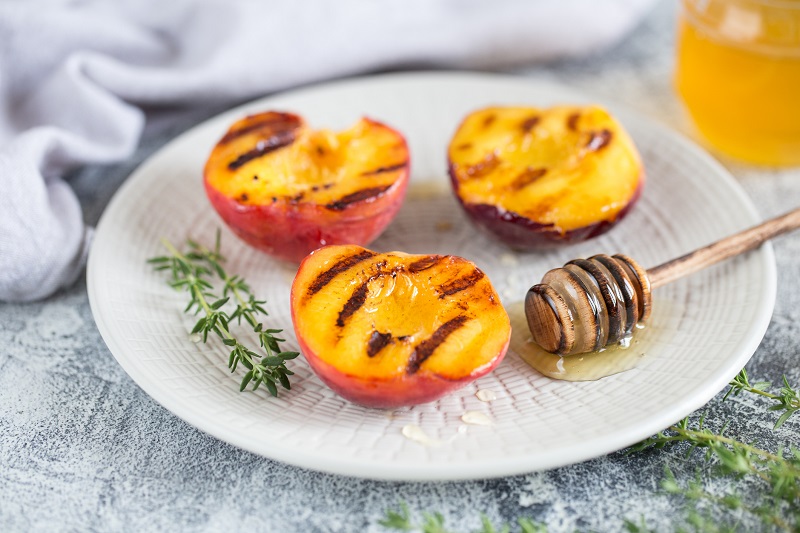
grilled peaches

Grilled watermelon, pineapple, peaches and plums are bursting with flavor: The grilling caramelizes their natural sugar, so the foods taste even sweeter. These delicious and refreshing fruits are packed with fiber and immunity-boosting vitamins. Plus, they are much lower in calories than the sad, melting fare you’ll usually find at a cookout’s dessert table.

Get grilling tips for a variety of different fruits right here on The Leaf! Check out this guide for 10 fruits that taste even better grilled. >

9. Don’t focus just on the food!

cookout recipes

Sure, it’s a “cookout” and burgers and dogs are delicious. However, it’s not the reason everyone’s together. We’re finally able to get together. So, have a plate and make sure it satisfies. Sit down, take your time and concentrate on the flavors and textures of these delicious cookout foods. In a recent study, published in the International Journal of Obesity, researchers looked at the eating habits of 60,000 people. They found that eating slowly can decrease the risk of obesity.

When you’re finished eating your healthy barbecue meal, put your focus on those around you. We’ve all been apart so long that this could be easier than ever. But make a point of remembering: This event is about food, yes, but it’s really about being together. So be present and be together!

10. Have a plan for the food and the leftovers.
cookout recipes

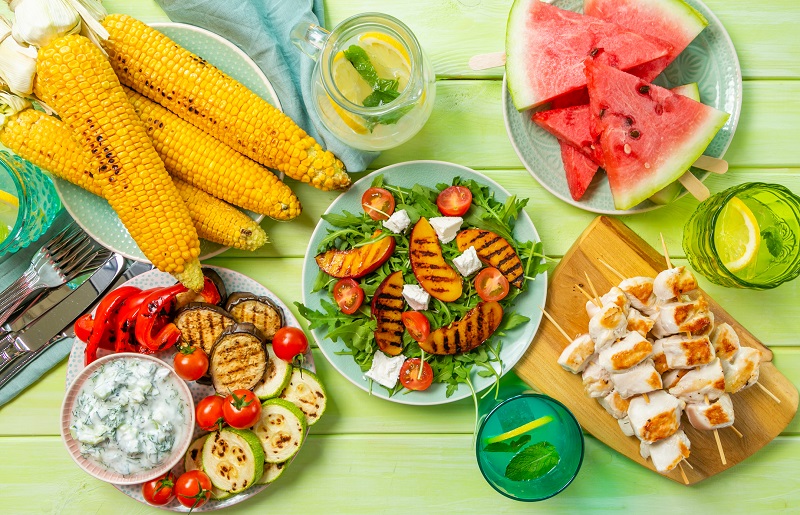
If you cook up a smorgasbord, have a plan in place for the aftermath. Before guests arrive, figure out how many portions of each type of dish you can plan to add to your eating schedule in the following days. If there’s a favorite dessert, salad or entrĂ©e you’re making, think about when it can fit into your plan. Keep the correct number of pre-measured portions for yourself and your family when guests leave. Then have containers ready for others to take the rest of the leftovers home with them. You’ll have pre-measured treats that fit your lifestyle, and less temptation to pull you off your plan in the days following the cookout.

10 BBQ Survival Tips from a Weight Loss Expert

Read More

The post 10 Tips for a Healthy Home Cookout appeared first on The Leaf.


from The Leaf https://ift.tt/fzOwJAD