Wednesday, January 10, 2024

500 cal deficit isn't the only way

Most diets fail, and slow and steady isn't the holy grail of weight loss. The same way we shouldn't tell people you need to fast, or do keto, or whatever other diet type. People need to do what works for them, not what works for you. So can we stop telling people 1000cal deficits are unhealthy (when they can still meet their nutritional needs) and you'll fail, rebound or whatever. Because the failure rates pretty much the same.

From a study in 2014 - The effect of rate of weight loss on long-term weight management: a randomised controlled trial

"After phase 1, 51 (50%) participants in the gradual weight loss group and 76 (81%) in the rapid weight loss group achieved 12·5% or more weight loss in the allocated time“

"both gradual weight loss and rapid weight loss participants who completed the study (n=43 in gradual weight loss and n=61 in rapid weight loss) had regained most of their lost weight (gradual weight loss 71·2% regain, 95% CI 58·1–84·3 vs rapid weight loss 70·5%, 57·8–83·2)."

2010 study - The association between rate of initial weight loss and long-term success in obesity treatment: does slow and steady win the race?

"Participants were encouraged to reduce caloric intake to achieve weight losses of 0.45 kg/week. Groups were categorized as “FAST” (≥0.68 kg/week, n = 69), “MODERATE” (≥0.23 and <0.68 kg/week, n = 104), and “SLOW” (<0.23 kg/week, n = 89) based on rate of weight loss during first month of treatment.

Results The FAST, MODERATE, and SLOW groups differed significantly in mean weight changes at 6 months (−13.5, −8.9, and −5.1 kg, respectively, ps < 0.001), and the FAST and SLOW groups differed significantly at 18 months (−10.9, −7.1, and −3.7 kg, respectively, ps < 0.001). No significant group differences were found in weight regain between 6 and 18 months (2.6, 1.8, and 1.3 kg, respectively, ps < 0.9). The FAST and MODERATE groups were 5.1 and 2.7 times more likely to achieve 10% weight losses at 18 months than the SLOW group."

submitted by /u/Opening-Damage
[link] [comments]

from loseit - Lose the Fat https://ift.tt/pZkuSz3

Any advice for quitting/cutting down on delivery/takeaway?

Hi all. I’m restarting my weight loss goals after starting last year but stopping due to having surgery and losing motivation for gym whilst I recovered.

One of my New Year’s resolutions is to cut down on food deliveries/takeaway meals, not just because they’re unhealthy, but because I’m moving house and going back to university as a mature student later this year and want to save up as much money as possible to help! They’re so expensive! I’m realising now I might have an addition which makes me feel kinda gross about myself but better to be honest I guess.

Does anyone have any tips on quitting/heavily cutting down on fast food delivery? Thank you

submitted by /u/firetruck12345
[link] [comments]

from loseit - Lose the Fat https://ift.tt/RTWufen

Tuesday, January 9, 2024

Weight loss plateau

I’ve been losing weight for wrestling and I’m down like 10-12 pounds from preseason, but I’ve stalled out around 138-140 pounds at 5’9”. I need to be close to 134 (my weight class) because cutting 6 pounds of water is absolute torture and I know the dehydration is harming my athletic performance.

I’ve been trying to only eat 1500 calories a day but the scale still ain’t going down. I know that I sabotage myself a bit by having binges after weigh ins, but I feel like having that day once a week shouldn’t be hurting me as much as it is and I’m working to cut the binges entirely.

Any advice?

submitted by /u/notandyhippo
[link] [comments]

from loseit - Lose the Fat https://ift.tt/wlNLBrj

Too much fat?

I love high quality olive oil and I consume a LOT of it on a daily basis. I feel like I’ve been eating a pretty healthy diet lately, heavily plant based, almost no processed foods or junk foods, but I’m consuming several tablespoons to 1/4 a cup of olive oil with lunch and dinner. I also add a little half and half to my coffee, eat 4% fat cottage cheese for dessert. I feel like I eat a higher portion of fat than is recommended, but I figure that I make up for it by eating less carbs/protein. Will this hinder my weight loss?

submitted by /u/BrittlezBest
[link] [comments]

from loseit - Lose the Fat https://ift.tt/G86bXpJ

Rock hard bf (?) lumps throughout body

44, M here. Growing up I always had a large gut with skinny arms and legs. In my 20's I took up martial arts and eventually lifting. My gut went down but not completely gone. Put on a bunch of weight during covid and now on a really good meal plan + hiit + walking 5km a day + 3x heavy weight lifting sessions a week.

I still have a super huge gut with massive over hang. I'm slowly losing chest fat which is great coz I hate the moobs.

My question is around the texture of the fat itself. If I pinch the skin in my stomach, hips, chest or even arms there are hundreds of rock hard deposits around the size of peas. I have tried crushing the min my fingers before and can actually click them together with an audible crunching noise. They don't protrude the skin at all. I thought these were Lipomas but in all the googling I've done, they really don't align with the descriptions and pictures I've come across.

It's driving my crazy and as I maintain a steady weight loss on my new regime I've been sticking to for the last 8 months - I wonder if these lumps are eventually going to melt away with the rest of the fat or is it really just lipoma? These things are EVERYWHERE uggggh. Thanks in advance.

submitted by /u/throwawaybfq
[link] [comments]

from loseit - Lose the Fat https://ift.tt/gHSQAxZ

Hit a plateau at 6 weeks

So I’m six weeks in to my journey here (42M, 6’3/192cm, SW 410lb/186kg, CW 383lb/174kg) and I’ve hit a plateau where despite doing everything the same, I haven’t moved the scale in 10 days.

I know that the first few weeks of weight loss are mostly water weight, and the dramatic pace (5lb/2kg per week) was not going to last, so I’m assuming this plateau is expected.

My average TDEE is around 4200 calories (per Garmin, Apple Watch, and multiple websites), my calorie intake is consistently around 2400 calories (one or two days a week it’ll be up to 2800) and I do cardio (recumbent bike) for 30 minutes 4x a week. (Work is mostly sedentary at a desk, but I’m incorporating a standing desk routine, and intentionally hitting the stairs more often than before 3-4times a day, even if it’s not needed.)

Any words of advice? Stay the course? Change something up?

Any words of encouragement?

submitted by /u/whalecardio
[link] [comments]

from loseit - Lose the Fat https://ift.tt/UyYgxJM

Monday, January 8, 2024

5 Health and Fitness Goals for 2024

Haven’t chosen your New Year’s resolution for 2024 yet? You’re never too late: Any day is the perfect day to start exercising and reaping loads of health benefits, like drastically reduced risks of heart disease, stroke, diabetes and even early death.

Just make sure your goal is really achievable: While many people like the sound of running 10 marathons or becoming a world champion powerlifter, keeping things simple in year one can help you build towards bigger goals with subsequent resolutions.

Your fitness goals should be challenging yet realistic. According to experts at CaƱada College, “unattainable goals are often the cause of injury, frustration, and ultimately the discontinuation of exercise.” They recommend creating short-term goals that are more attainable in the beginning of your fitness journey.

So here are five fitness goals you can really achieve this year—and each is backed by science, so they’re really worth doing!

Goal 1: Walk 4,400 to 7,972 steps per day.
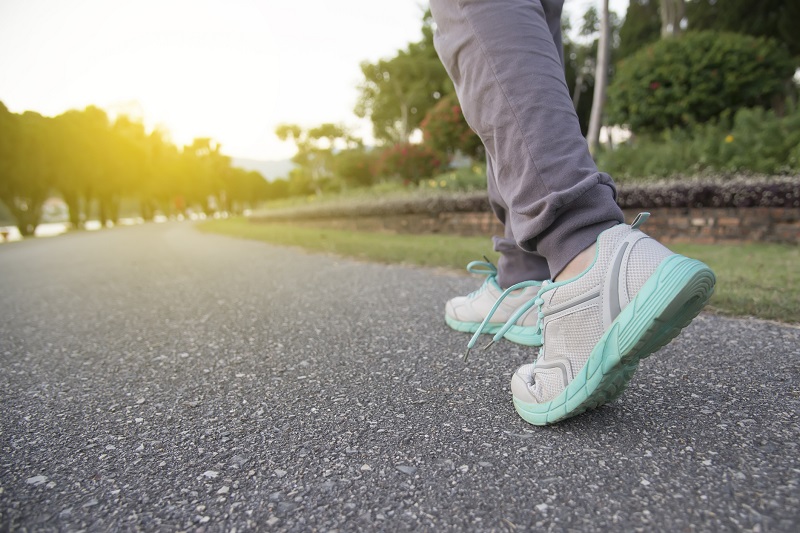
Person jogging on a track

Thought the magic number was 10,000? Think again: The 10K number is said to have actually started as a marketing tool to sell pedometers in Japan in the 1960s.

That doesn’t mean that counting your steps is useless, though: In one study, older women who averaged 4,400 steps or more significantly reduced their risk of death compared to other women who walked about 2,700 steps per day. The researchers explain, “With more steps per day, mortality rates progressively decreased before leveling at approximately 7500 [steps per day].”

In another study of older adults, those who took 7,972 or more steps per day had a lower risk of death than walkers who logged less than 4,503 steps each day.

Use those results as your step goals: Strive to stride 4,400 to 7,972 times per day.

Goal 2: Do muscle strengthening activities twice a week.
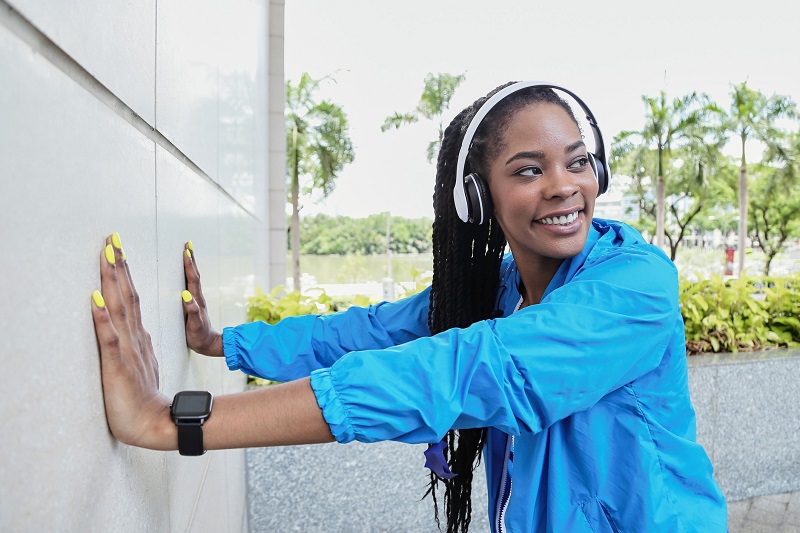
Woman stretching against a wall

You often hear about the Centers for Disease Control and Prevention (CDC) recommendation to get at least 150 minutes a week of moderate-intensity aerobic activity. (That’s 30 minutes, five days a week.) But did you know that the CDC also recommends doing activities that strengthen muscles at least two days each week?

According to The American Council on Exercise (ACE), strength training can help strengthen muscles and bones, increase the metabolism, decrease blood pressure and improve quality of life. Maintaining your muscle as you get older is essential. “Unless you regularly engage in activities to strengthen your muscles, you’ll lose about a half a pound of muscle a year in your 30s and 40s, and that rate can double once you turn 50,” says ACE.

Your weekly strength training doesn’t have to be all at once, and it doesn’t have to be as intense as a CrossFit class. You can do easy dumbbell or resistance band workouts. No equipment? No problem! Try this simple, four-move series that uses your own body weight to boost your strength:

  1. Move 1 – Wall Pushups: Standing with your feet away from a wall, put your hands on the wall, and slowly control your body as you bend your elbows to move your torso towards the wall. Keep your body straight from head to heels as you press back to standing.
  2. Move 2 – Step Ups: On the bottom step of a staircase, place one foot on the step, and press through the center of your raised foot to straighten your leg until your other foot could meet it on the step. Step down, and repeat with the other leg.
  3. Move 3 – Squat to a Chair: Hover over a chair, and control yourself as you sit down, not using your hands. If you can, stand back up without using your hands.
  4. Move 4 – Glute Bridge: Lie face up on the floor with your knees bent and feet flat on the floor. Squeeze your glutes to raise your butt up until your body forms a straight line from head to knees. Slowly return to the start.

Do each exercise for 15-20 seconds, then rest until the next minute starts and move to the next exercise. Repeat in this way for 15 minutes.

Goal 3: Sleep for at least 7 hours per night.
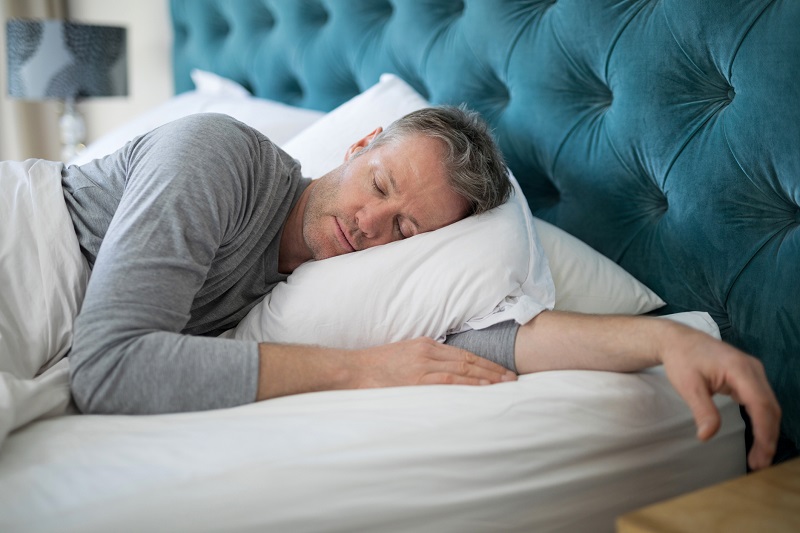
Man resting in bed

Is sleep a fitness goal? You bet! In fact, it may be the most important one of all: According to the CDC, “Adults need 7 or more hours of sleep per night for the best health and wellbeing.” Consistently getting too little shuteye (less than seven hours a night) is associated with poor health outcomes, including weight gain, diabetes, depression, high blood pressure, stroke and heart disease.

In a review of research, published in the journal Sleep, scientists found that sleeping less than seven hours per night was associated with a 12 percent increased risk of early death compared to sleeping seven to eight hours per night.

Sleep is also key to achieving your other fitness goals: When you sleep, your body can repair your muscles and give you the energy you’ll need for your next bout of physical activity. So hit the hay this year!

Goal 4: Go for a 10-minute walk every time you eat.
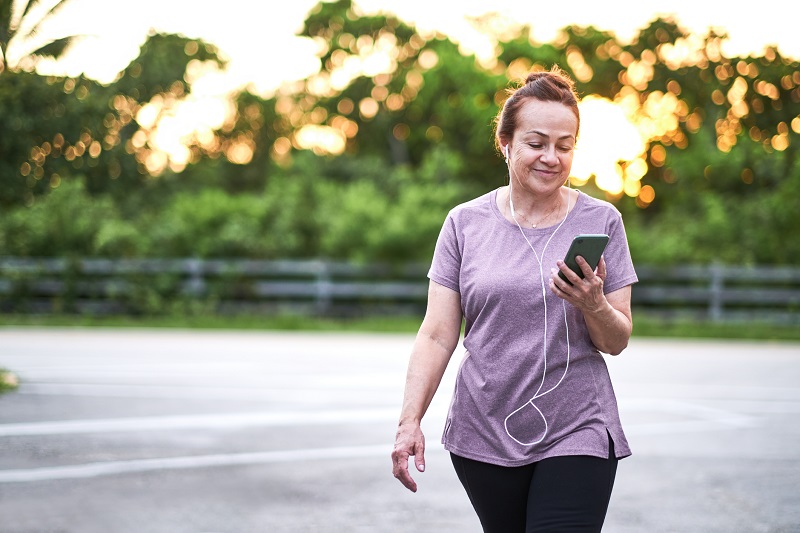
Woman checking her phone while walking outside

This is an easy way to get to that 4,400+ steps. Plus, timing your 10-minute walks with your three main meals will help you check off your 30 minutes of recommended physical activity. According to experts at Mayo Clinic, regular, brisk walking can help improve your cardiovascular health and decrease your risk of various conditions, including high blood pressure, heart disease, cancer and Type 2 diabetes.

Timing your walks for after meals has other potential benefits, too. According to Medical News Today, “Research suggests that a short walk after eating helps manage a person’s blood glucose, or blood sugar, levels. Moderate daily exercise can also reduce gas and bloating, improve sleep, and boost heart health.” Research has also shown that taking three 10-minute walks each day may reduce systolic blood pressure (the top number) in individuals with prehypertension.

So when you put down your fork, lace up your shoes!

Goal 5: Find a fitness activity that’s fun for you.
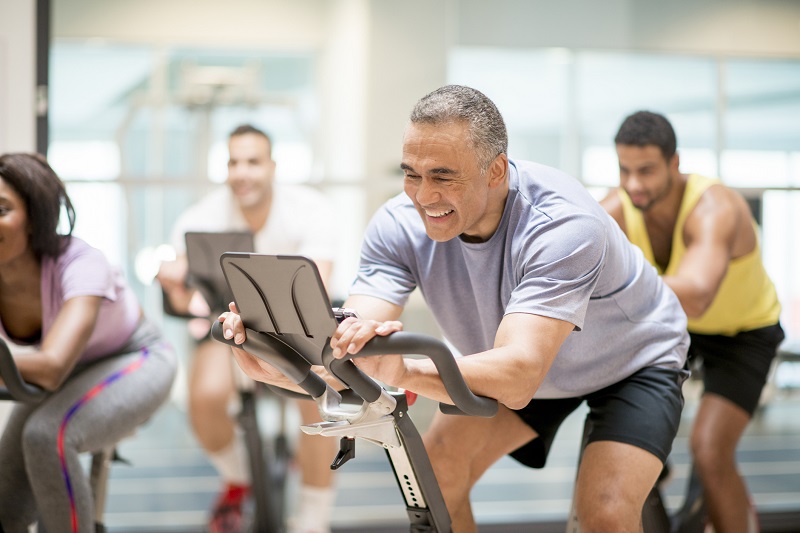
Man enjoying spinning class

Too many Americans think exercise has to be painful drudgery to work. But the opposite is true: Studies show that when people enjoy their workouts, they’re more likely to actually do them. And it’s no secret that an increase in exercise adherence can lead to better results.

If you’re going to spend 10, 20, 30 or more minutes of your free time doing something, it ought to be something that not only improves your health, but improves your mood. So while you’re walking and strengthening this year, resolve to find something about fitness you enjoy: Maybe it’s working out while talking on the phone with your best friend. Maybe it’s a new type of class or a new instructor that really gets you. Maybe it’s an active game or sport. Or maybe it’s a funny shirt that you love putting on each time you sweat. Find that thing you love, and you’ll create a habit that will last far beyond 2024.

*Always speak to your doctor before beginning a new exercise routine.

The post 5 Health and Fitness Goals for 2024 appeared first on The Leaf.


from The Leaf https://ift.tt/xmwkvjq